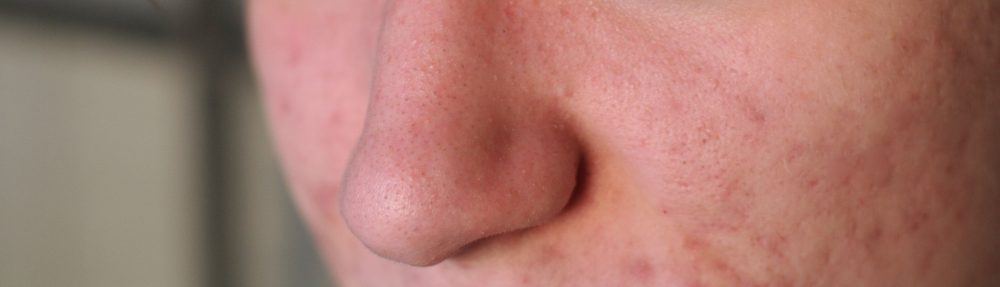
Rosacea and acne are two of the most common skin conditions affecting adults, and they are frequently confused with one another. While both can cause redness and pimple-like breakouts on the face, they are distinct conditions with different causes, different affected populations, and different treatment approaches. Understanding the difference is important for getting the right treatment.
Rosacea is a chronic inflammatory skin condition that primarily affects the central face — the cheeks, nose, chin, and forehead. It is most common in fair-skinned adults between the ages of 30 and 60, and affects women more often than men, though men tend to develop more severe forms.
Rosacea is characterized by:
- Persistent facial redness — a flushed, blush-like redness that doesn’t go away
- Visible blood vessels (telangiectasia) — small, dilated blood vessels visible under the skin
- Inflammatory bumps and pustules — red bumps that can resemble acne pimples
- Skin thickening (rhinophyma) — in severe cases, particularly in men, the skin of the nose can thicken and become bulbous
- Eye irritation (ocular rosacea) — redness, dryness, and irritation of the eyes affects up to 50% of rosacea patients
Rosacea tends to flare in response to triggers such as sun exposure, heat, spicy foods, alcohol, stress, and certain skincare products.
What is Acne?
Acne vulgaris is a skin condition caused by the clogging of hair follicles with oil (sebum) and dead skin cells, leading to whiteheads, blackheads, pimples, and in severe cases, cysts and nodules. It is most common during adolescence due to hormonal changes, but can persist into or begin in adulthood.
Acne is driven by four main factors:
- Excess sebum production
- Clogged pores (comedones)
- Bacterial overgrowth (Cutibacterium acnes)
- Inflammation
Key Differences Between Rosacea and Acne
| Feature | Rosacea | Acne |
|---|---|---|
| Age of onset | Usually adults 30–60 | Usually teens, can persist |
| Skin type | Often fair skin | All skin types |
| Blackheads/whiteheads | Not a feature | A defining feature |
| Facial redness | Persistent, diffuse | Localized around pimples |
| Visible blood vessels | Common | Not present |
| Triggers | Sun, heat, alcohol, stress | Hormones, diet, bacteria |
| Location | Central face | Face, back, chest, shoulders |
| Scarring | Rare | Can occur with severe acne |
The most important distinguishing feature: Rosacea does not produce blackheads or whiteheads (comedones). If you have comedones, it is acne. If you have persistent redness and flushing without comedones, it is more likely rosacea.
Can You Have Both Rosacea and Acne?
Yes. It is possible — particularly in adults — to have both conditions simultaneously. This is sometimes called “acne rosacea,” though dermatologists generally prefer to diagnose and treat them as separate conditions. Adult women in their 30s and 40s are most likely to present with both.
Treatment Differences
Because the two conditions have different underlying causes, they require different treatments:
Rosacea treatments focus on reducing inflammation and avoiding triggers:
- Topical metronidazole, azelaic acid, or ivermectin
- Oral antibiotics (doxycycline) for inflammatory flares
- Laser and light therapies for redness and visible blood vessels
- Gentle, fragrance-free skincare and high-SPF sun protection
Acne treatments focus on unclogging pores and reducing bacterial growth:
- Topical retinoids and benzoyl peroxide
- Topical or oral antibiotics
- Hormonal therapies (for women)
- Isotretinoin for severe cases
⚠️ Important note: Some common acne treatments — particularly benzoyl peroxide, strong retinoids, and alcohol-based toners — can actually worsen rosacea by irritating the skin. This is why an accurate diagnosis from a dermatologist is essential.
When to See a Doctor
If you are unsure whether you have acne, rosacea, or both, see a board-certified dermatologist. Both conditions are highly treatable, but using the wrong treatment can make symptoms worse. Early treatment of rosacea in particular is important, as the condition tends to be progressive if left untreated.
Disclaimer: The information on this page is provided for educational and background purposes only and does not constitute specific medical advice. Always consult your healthcare provider regarding your personal acne concerns and before starting any new treatment. Do not use any treatment, oral or topical, if you are pregnant, planning to become pregnant or nursing, without consulting your provider.